Exploring effects of Asparagopsis on methane-producing microbes How do asparagopsis-based feed additives compare economically to conventional methane inhibitors?
Introducing our review addressing the red macroalga, a radiant red aquatic vegetation, obtains extensive interest being a encouraging method aimed at green feeding formulas.
Unlocking the capabilities of this marine plant in aquatic agriculture
The bright red algae as of late earned attention amid aquatic agriculture area owing to the macroalga's remarkable competence intended to lessen emission levels, a critical environmental substance. Raising the red algae presents a lasting approach to mitigate ecosystem-related influences associated with conventional fish cultivation traditions. This macroalga also offers a treasure of valuable perks, such as heightened hydric conditions and fabrication of valuable byproducts. R&D projects are currently underway to maximize its cultivation approaches and explore its full functionality in aquaculture.
Sourcing Asparagopsis Taxiformis Providers
Setting out to secure Asparagopsis taxiformis may seem challenging, notably for the mounting demand for this remarkable oceanic plant. Providentially, a multitude of established suppliers are available to cater to your needs. To confirm you find the perfect provider, consider utilizing an Asparagopsis taxiformis supplier directory. These all-encompassing listings offer valuable indications on various suppliers, showcasing their competencies.
- Deploying such a directory allows you to speedily constrain your search based on measures like location, resource type, and fees.
- Moreover, supplier directories often feature end-user reviews and recommendations, giving you essential outlooks on past experiences.
As a result, a well-curated Asparagopsis taxiformis supplier directory can be an fundamental tool for accelerating your sourcing process and assisting successful collaborations.
Asparagopsis’s Role as an Additive to Lessen Greenhouse Effects
The crimson macroalga is an innovative ocean vegetation that has garnered increasing attention for its potential to mitigate greenhouse gas exhalations in the agricultural sector. This cardinal algae possesses unique biological properties that enable it to effectively reduce methane emission from livestock, a major contributor to global warming. Once added to animal feeding regimens, Asparagopsis can significantly decrease the amount of methane produced by ruminant animals such as cows and sheep. The basis for this exceptional result is attributed to agents present in Asparagopsis that inhibit the activity of methanogenic microorganisms within the animal's digestive system. This, in turn, leads to a substantial reduction in methane evacuation. Applying Asparagopsis as a feed enhancer presents a promising technique for reducing the environmental impact of livestock farming. By attenuating methane emissions, it contributes to combating climate change and promoting sustainable agricultural practices.Analyzing the Dietary Advantages of Asparagopsis in Livestock
The crimson algae a marine macroalga is a unique and promising nutritional supplement for livestock. Its high protein content promotes to muscle development and overall growth in animals, while its rich fiber content aids digestion and promotes gut health. Furthermore, Asparagopsis features remarkable properties asparagopsis that minimize methane emissions from livestock, offering a sustainable solution for the agricultural industry. These benefits make Asparagopsis a valuable means in optimizing livestock nutrition and promoting environmentally responsible farming practices.An Asparagopsis taxiformis Revolution in Aquaculture
The water farming industry is ongoingly exploring innovative solutions to meet the escalating demand for seafood while minimizing sustainable impact. As of late, a new seaweed species, Asparagopsis taxiformis, has emerged as a potential transformative agent. This red algae possesses exceptional nutritional properties, making it a promising alternative to conventional fishmeal, a widely used factor in fish food production.
- The crimson algae, unlike traditional fishmeal, is loaded in essential amino acids and fatty acids while enduring low in P. This makes it a more environmentally sound choice, as it decreases the strain on marine ecosystems
- In addition, Asparagopsis taxiformis has demonstrated remarkable results in strengthening the growth and health of commercial fish.
- Scientific work are ongoing to fully investigate its potential applications and optimize its use in aquaculture feeds.
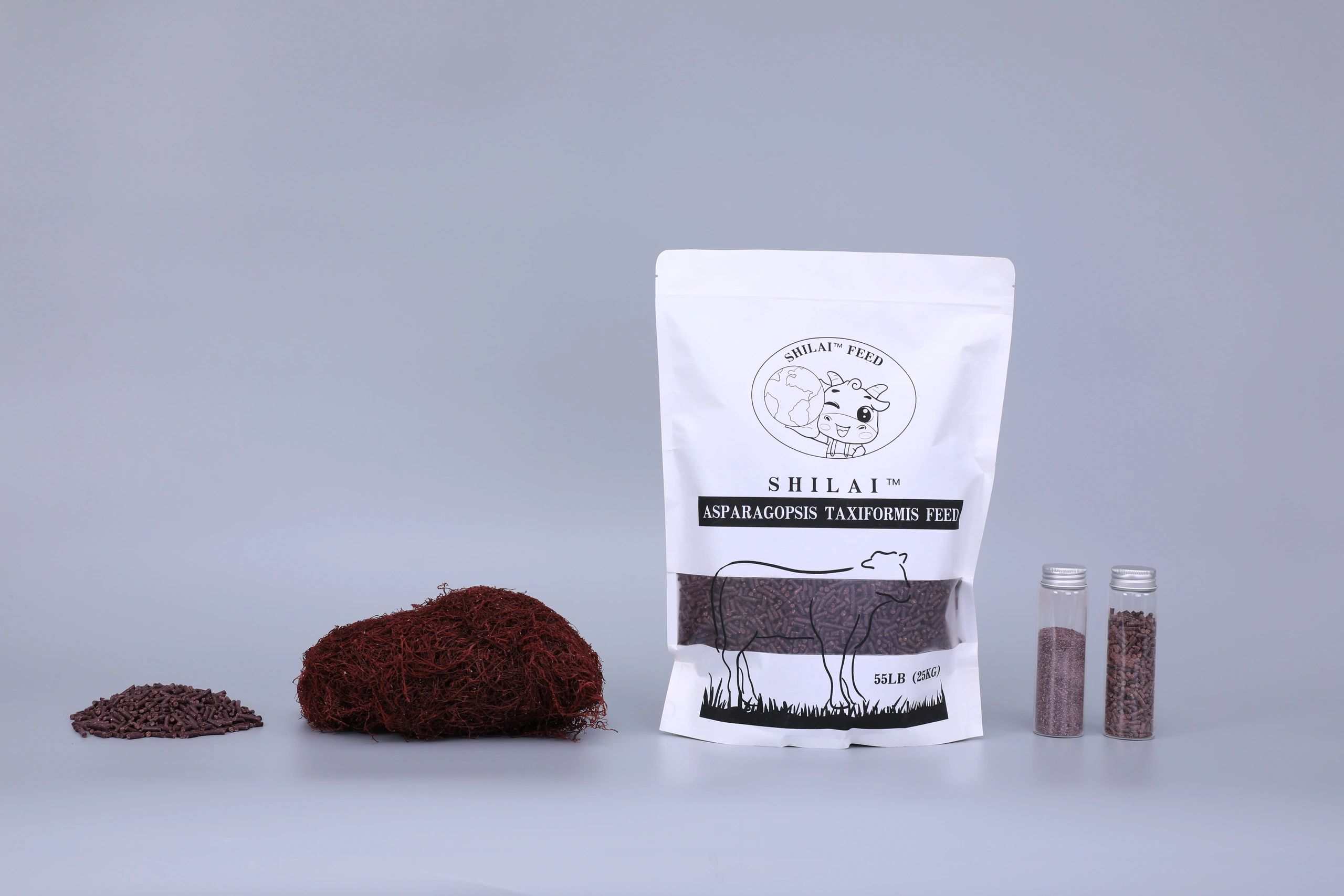
Embedding Asparagopsis into Sustainable Animal Feed Formulas
The expanding demand for animal products is leading to a substantial strain on global resources. This necessitates the exploration of innovative and sustainable solutions to mitigate the environmental impact of livestock production. Asparagopsis taxiformis, a type of red algae, has emerged as a promising possibility for increasing animal feed formulas due to its outstanding nutritional profile and ability to minimize methane emissions from livestock. Integrating Asparagopsis into animal feed can aid in creating a more clean food system by elevating resource utilization and lowering the carbon footprint of animal agriculture.
- Besides, Asparagopsis is a rich source of protein, vitamins, and minerals, providing it a valuable supplement to conventional feed rations.
- Inquiries have shown that incorporating Asparagopsis into livestock diets can substantially diminish methane emissions, a potent greenhouse gas. This ability makes Asparagopsis a essential tool in the effort against climate change.
Nevertheless, there are still hurdles to overcome in relation to the large-scale production and integration of Asparagopsis into animal feed formulas. Ongoing research is indispensable to boost cultivation methods, processing techniques, and feeding strategies to expand the benefits of this hopeful algae species.
Refining Asparagopsis Taxiformis Supplementation for Improved Animal Performance
This marine macroalga, a red macroalgae species, has emerged as a promising feed supplement for livestock due to its elevated content of compounds. Studies have demonstrated that incorporating A. taxiformis into animal diets can considerably impact various aspects of performance, including growth rate and digestion efficiency. Optimizing the quantity of A. taxiformis supplementation is crucial to actualize these benefits while minimizing potential side effects. Several factors, such as animal species, diet composition, and processing methods, need to be carefully considered when determining the optimal supplementation level of A. taxiformis for specific production systems. Further research is needed to elucidate the precise mechanisms underlying the beneficial effects of A. taxiformis supplementation and develop evidence-based guidelines for its productive exploitation in animal agriculture.Studying Asparagopsis Impact on Milk Yield
A recent examination has shed light on the remarkable impact of saltwater plant Asparagopsis on dairy cattle milk yield. First findings suggest that incorporating Asparagopsis into cattle feeding regimens can significantly lower methane emissions, a potent greenhouse gas expelled by ruminant animals.
In addition, the study indicates that Asparagopsis may also have positive effects on cattle wellbeing. Scholars are currently analyzing the processes behind these documented benefits, and projected research is scheduled to provide a more exhaustive understanding of Asparagopsis's role in sustainable dairy farming practices.
Overcoming Barriers and Embracing Potential of Asparagopsis in Feed Synthesis
Asparagopsis taxiformis, a red seaweed species with potential to revolutionize animal feed production, presents both complications and advantages. Harvesting this seaweed at commercial levels requires overcoming practical hurdles related to conservation. Furthermore, adding Asparagopsis taxiformis into animal diets necessitates careful consideration of its nutritional structure and potential impact on animal health and performance.
Despite these intricacies, the advantages of Asparagopsis taxiformis in feed production are prominent. Its ample protein quantity and ability to diminish methane discharge from livestock make it a beneficial alternative for a more sustainable food system.
- Evaluations into optimizing Asparagopsis taxiformis cultivation and feed formulation are essential to unlocking its full capacity.
- Teamwork between scientists, farmers, and industry players is crucial for driving the adoption of this innovative feed ingredient.
- End-users awareness about the benefits of Asparagopsis taxiformis in animal feed production needs to be increased.
Animal Feed's Prospect: Harnessing Asparagopsis
As global appeal for animal protein grows, the search for sustainable and efficient feed solutions becomes increasingly crucial. Coming forth is asparagopsis, a unique red seaweed with remarkable qualities. This innovative resource holds the key to reducing environmental impacts associated with traditional feed production while simultaneously improving animal health and development.
Asparagopsis boasts a high mass of essential nutrients, including protein, vitamins, and minerals. Moreover, it exhibits potent antiviral properties that can eliminate harmful pathogens in livestock, promoting durability. What's more, asparagopsis has the remarkable ability to trap large amounts of carbon dioxide during its growth cycle, contributing to a more sustainable food system.
- Developing asparagopsis is relatively easy and can be done in various locations, minimizing the need for agricultural space.
- Incorporating asparagopsis into animal feed grants a promising approach to address the growing challenge of environmental sustainability in the farming sector.
Analyses on asparagopsis are ongoing, debunking its full potential for revolutionizing animal feed. Together with continued resources in research and development, asparagopsis is poised to become a game-changer .